

By John Beverly, Reader, Springline Parish
Easter is about forgiveness. From Tuesday on here are some stories about forgiveness.
But first take a look at Monday and consider the better course!
Monday – Please don’t go for second best.
 There’ll be more Daily Devotions coming along. But these are easily not the best.
This week the Christian Festival called Spring Harvest can’t be held because of lockdown. So they have gone online. Please have a look at springharvest.org to see what’s going on.
If it doesn’t suit you come back here tomorrow for more stories on forgiveness.
Tuesday – Shock:God Speaks to a Woman
A woman was speaking to her priest at the end of a Sunday service. “When I pray every day,” she said, “Jesus comes and speaks to me. Speaks in proper words that I can hear.”
The priest was rather dubious. In fact, he didn’t believe her. He had an idea about how he could prove her wrong. “Next time he comes and speaks to you,” he suggested, “ask him what it was that I said at my last confession.”
Next Sunday the priest looked out for the woman. “Did you ask Jesus what it was I confessed?” he asked.
“Oh, yes,” she replied. “He said that he’s already forgotten!”
Easter is the time when our forgiveness by God is made complete. God knows every little thing about us so there’s no point in holding back. We can own up and tell him everything for which we are sorry.
Then he wipes it all away. Free of charge to us.
God’s grace is like this. There is nothing more that we can do to cause him love us more. There is nothing we can do wrong to cause him love us less.
Father God,
Thank you for the love and sacrifice of Jesus. Thank you for your forgiveness.
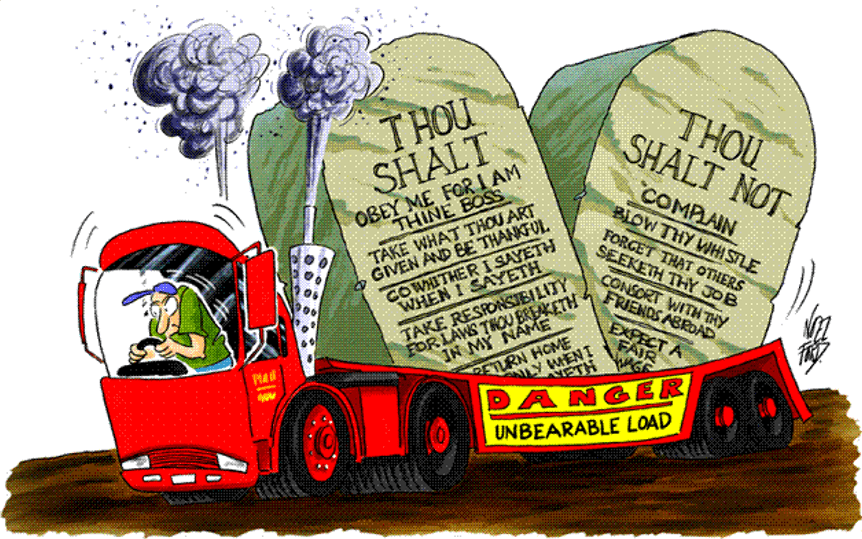
Tuesday – The Trucker and the Pastor
A couple of true stories.
A Baptist minister stopped at a transport cafe to get a bite to eat. He sat next to a truck driver who was eating his lunch, and started up a friendly conversation.
Within about fifteen minutes the trucker was bragging that he was strung out on cocaine, that he had had great sex with a girl he met in a bar the night before, that this sort of thing typically happened a couple times a week, and that his live-in girl friend of seven years pretends not to know about it because her two kids needed a dad. He seemed to think this was funny.
When he’d finished his colourful monologue, he asked the Minister what he did for a living, and the minister told him!
The trucker’s response was rather interesting.
Putting his arm around the Minister’s shoulder he said, “We’re brothers. I’ve already accepted Jesus as my saviour. My grandma had me go forward and pray the sinners prayer when I was five.” The trucker then explained that he gave up on religion in his early teenage years, but he never forgot that, because he’d accepted Jesus, “God doesn’t see my sin any more.” The minister enquired how that worked – an all-knowing God unable to see something? “God sees me through Jesus’ spectacles!” he exclaimed, almost in a loud preacher’s voice. “He doesn’t see my sin; he sees the blood of Jesus!”
Anjeze Bojsxhiu was a teacher in India. In 1946 she went on a retreat to the Himalayan foothills. On the journey there she felt Christ calling her to abandon the safety of her role at the school, go to work in the slums of the city, dealing directly with the poorest of the poor – the dying, beggars, street children. She said that she heard the voice of Jesus himself saying, “Come, be my light.”
She started her work in 1948. Five years later in 1953 she wrote to somebody saying, “Please pray for me … that our Lord may show Himself – for there is such a terrible darkness within me as if everything is dead.” Further letters published after she died showed that she lived with this for the rest of her life.
Anjeze is, of course, better known as Mother Teresa.
Who do you think you are more likely to see in heaven? The trucker who seems to have great faith or Mother Teresa who seemed to have lost faith?
Mother Teresa lived with doubt, questions and darkness. But what she showed was immense FAITHFULNESS. That’s different from faith. The faithfulness of Mother Teresa was the undying loyalty to the call of Jesus she heard in 1946.
You may have heard the Bible passage for today before. It is from the Letter written by James. “Faith is dead if it has no works.”
Lord, show me how I can serve you faithfully in this place today.
Wednesday – Being Forgiven – Jason Richards
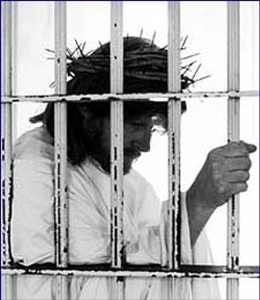 Jason Richards was in prison for life for murder. When he was 20 he and his brother had committed an armed robbery and killed an innocent bystander. He can never undo what he has done.
But he believes he has been forgiven for it.
There are some murderers in the Bible. Moses killed a man and had to flea the country. David committed adultery and then sent her husband, Uriah, into the thick of battle so that he got killed. Saul who became Paul stood by looking after a pile of clothes while others stoned Stephen to death.
Jason said, “I was in Parkhurst Prison. I was carrying an awful lot of guilt. I looked everywhere for answers. I read stuff on the occult, Buddhism, Islam. I didn’t believe in God. But when I read the Bible I started to believe he existed. And the more I became aware of God the more I was aware I was a sinner.
I wanted to be on God’s side. Yet it was as though I couldn’t be. It drove me to the point of desperation. I thought, “If I work hard, maybe he’ll accept me.”
Then one night in my cell I just let go totally. My sanity completely went and it was as though I was going into a black hole … there was nothing left. I shouted out, “God, have mercy on me! I started crying. I have never wept so much in my life.”
He picked up the Bible and started reading and came to Psalm 51. Here, David had written about his guilt after he’d arranged for Uriah to be killed:
O God, favour me because of Your loving-kindness. Take away my wrong-doing because of the greatness of Your loving-pity.
Wash me inside and out from my wrong-doing and make me clean from my sin. For I know my wrong-doing, and my sin is always in front of me. I have sinned against You, and You only. I have done what is sinful in Your eyes …
… Take away my sin, and I will be clean. Wash me, and I will be whiter than snow. Make me hear joy and happiness. Let the bones that You have broken be full of joy. Hide Your face from my sins. And take away all my wrong-doing. Make a clean heart in me, O God. Give me a new spirit that will not be moved.
And with the lines, Save me from bloodguilt, O God, the God who saves me, and my tongue will sing of your righteousness, Jason felt God speaking to him. And he just said, “O.K. I don’t care what it is. I’m yours. I’ll do whatever you like.
The whole Psalm became his life, turned him round and led him to be a dynamic witness for Jesus in prison, often doing what the Psalm said, using his guitar to “sing of your righteousness.”
Thursday – Stories of Forgiveness 1: An Amish Story

The simple, quiet rural life she knew shattered on Oct. 2, 2006, when Charles Carl Roberts, walked into a one-room Amish schoolhouse on a clear, unseasonably warm Monday morning.
The 32-year-old husband and father of three young children ordered the boys and adults to leave, tied up 10 little girls between the ages of 6 and 13 and shot them, killing five and injuring the others, before killing himself.
But in the hours after the massacre, as Amish parents still waited in a nearby barn for word about whether their daughters had survived, an Amish man named Henry arrived at the Roberts’s home with a message: The families did not see the couple as an enemy. Rather, they saw them as parents who were grieving the loss of their child, too. Henry put his hand on the shoulder of Charles Roberts’s father and called him a friend.
The world watched in amazement as, on the day of their son’s funeral, nearly 30 Amish men and women, some the parents of the victims, came to the cemetery and formed a wall to block out media cameras. Parents, whose daughters had died at the hand of their son, approached the couple after the burial and offered condolences for their loss.
But the Amish did more than forgive the couple. They embraced them as part of their community. When Mrs Roberts underwent treatment for Stage 4 breast cancer one of the girls who survived the massacre helped clean her home before she returned from the hospital. A large yellow bus arrived at her home around Christmas, and Amish children piled inside to sing her Christmas carols.
For most people, forgiveness and acceptance come at the end of a long emotional process. But the Amish forgive first and then every day work through the emotions of it. This “decisional forgiveness” opened a space for Mrs Roberts to offer her friendship, which normally in their situation would be uncomfortable.
Forgiveness brings reconciliation.
Friday – Bible Verses About Forgiveness
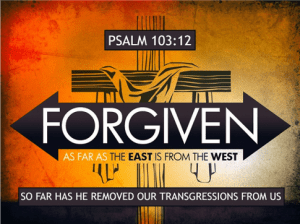 These are the Bible verses about forgiveness. They remind us that God’s forgiveness is so powerful. If we turn to Jesus, we find full forgiveness of our sins, freedom and peace.
Psalm 103:12 “As far as the east is from the west, so far has he removed our transgressions from us.”
Ephesians 1:7 “In him we have redemption through his blood, the forgiveness of sins, in accordance with the riches of God’s grace.”
1 John 1:9 “If we confess our sins, he is faithful and just and will forgive us our sins and purify us from all unrighteousness.”
Daniel 9:9 “The Lord our God is merciful and forgiving, even though we have rebelled against him.”
Isaiah 43:25 “I, even I, am he who blots out your transgressions, for my own sake, and remembers your sins no more …”
Isaiah 1: 18 “Come now, let us settle the matter,” says the Lord. ‘Though your sins are like scarlet, they shall be as white as snow;
though they are red as crimson, they shall be like wool.'”
Micah 7:18-19 “Who is a God like you, who pardons sin and forgives the transgression of the remnant of his inheritance?
You do not stay angry forever but delight to show mercy. You will again have compassion on us; you will tread our sins underfoot
and hurl all our iniquities into the depths of the sea.”
Hebrews 10:17 “Then he adds: “Their sins and lawless acts I will remember no more.”
Jeremiah 31: 34 “For I will forgive their wickedness and will remember their sins no more.”
Jesus’ forgiveness
Jesus gives us the perfect example of forgiveness. While in agony on the cross, Jesus called out, exclaiming “Father, forgive them, for they do not know what they are doing.” (Luke 23:34).
Wondering how many times the Bible calls us to forgive? Jesus asks us to model our forgiveness of others on the way God has forgiven us, forgiving “not by seven times, but seventy seven.”
Luke 5: 20 “When Jesus saw their faith, he said, ‘Friend, your sins are forgiven.’”
Luke 6:37 “Do not judge, and you will not be judged. Do not condemn, and you will not be condemned. Forgive, and you will be forgiven.”
Matthew 18: 21-22 “Then Peter came to Jesus and asked, ‘Lord, how many times shall I forgive my brother or sister who sins against me? Up to seven times?’ Jesus answered, ‘I tell you, not seven times, but seventy-seven times.'”
Matthew 6: 14-15 “For if you forgive other people when they sin against you, your heavenly Father will also forgive you. But if you do not forgive others their sins, your Father will not forgive your sins.”
Saturday – Stories of Forgiveness 2: A Concentration Camp Story
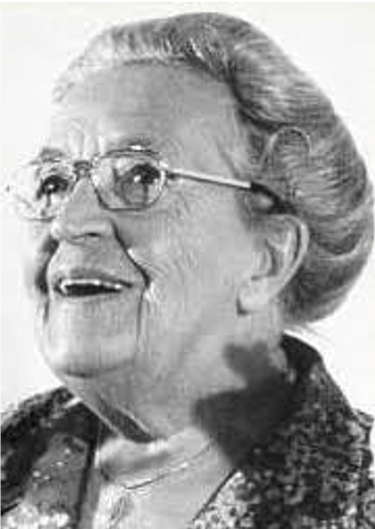
Corrie ten Boom was a Dutch woman who worked with her father, Casper, and her sister Betsie to help many Jews escape the Nazis from the Holocaust during World War II by hiding them in her home.
They were caught, she was arrested and sent to the Ravensbrück concentration camp. Her most famous book, The Hiding Place, is a biography that recounts the story of her family’s efforts and how she found hope while she was imprisoned at the concentration camp.
It was in a church in Munich where I was speaking in 1947 that I saw him – a balding heavyset man in a grey overcoat. One moment I saw the overcoat, the next, a blue uniform and a visored cap with its skull and crossbones.
Memories of the concentration camp came back with a rush: the huge room with its harsh overhead lights, the pathetic pile of dresses and shoes in the centre of the floor, the shame of walking naked past this man. I could see my sister’s frail form ahead of me, ribs sharp beneath the parchment of skin.
This man had been a guard at Ravensbruck concentration camp where we were sent.
Now he was in front of me, hand thrust out: “A fine message, fraulein! How good it is to know that, as you say, all our sins are at the bottom of the sea!”
It was the first time since my release that I had been face to face with one of my captors and my blood seemed to freeze.
“You mentioned Ravensbruck in your talk,” he was saying. “I was a guard there. But since that time,” he went on, “I have become a Christian. I know that God has forgiven me for the cruel things I did there, but I would like to hear it from your lips as well. Fraulein – “again the hand came out – “will you forgive me?”
And I stood there – and could not. Betsie had died in that place – could he erase her slow terrible death simply for the asking?
It could not have been many seconds that he stood there, hand held out, but to me it seemed hours as I wrestled with the most difficult thing I had ever had to do.
For I had to do it – I knew that. The message that God forgives has a prior condition: that we forgive those who have injured us. “If you do not forgive men their trespasses,” Jesus says, “neither will your Father in Heaven forgive your trespasses.”
Still I stood there with the coldness clutching my heart. But forgiveness is an act of the will, and the will can function regardless of the temperature of the heart. “Jesus, help me!” I prayed silently. “I can lift my hand. I can do that much. You supply the feeling.”
And so woodenly, mechanically, I thrust my hand into the one stretched out to me. And as I did, an incredible thing took place. The current started in my shoulder, raced down my arm, sprang into our joined hands. And then this healing warmth seemed to flood my whole being, bringing tears to my eyes.
“I forgive you, brother!” I cried. “With all my heart!”
For a long moment we grasped each other’s hands, the former guard and former prisoner. I had never known God’s love so intensely as I did then.
Forgiveness brings peace.